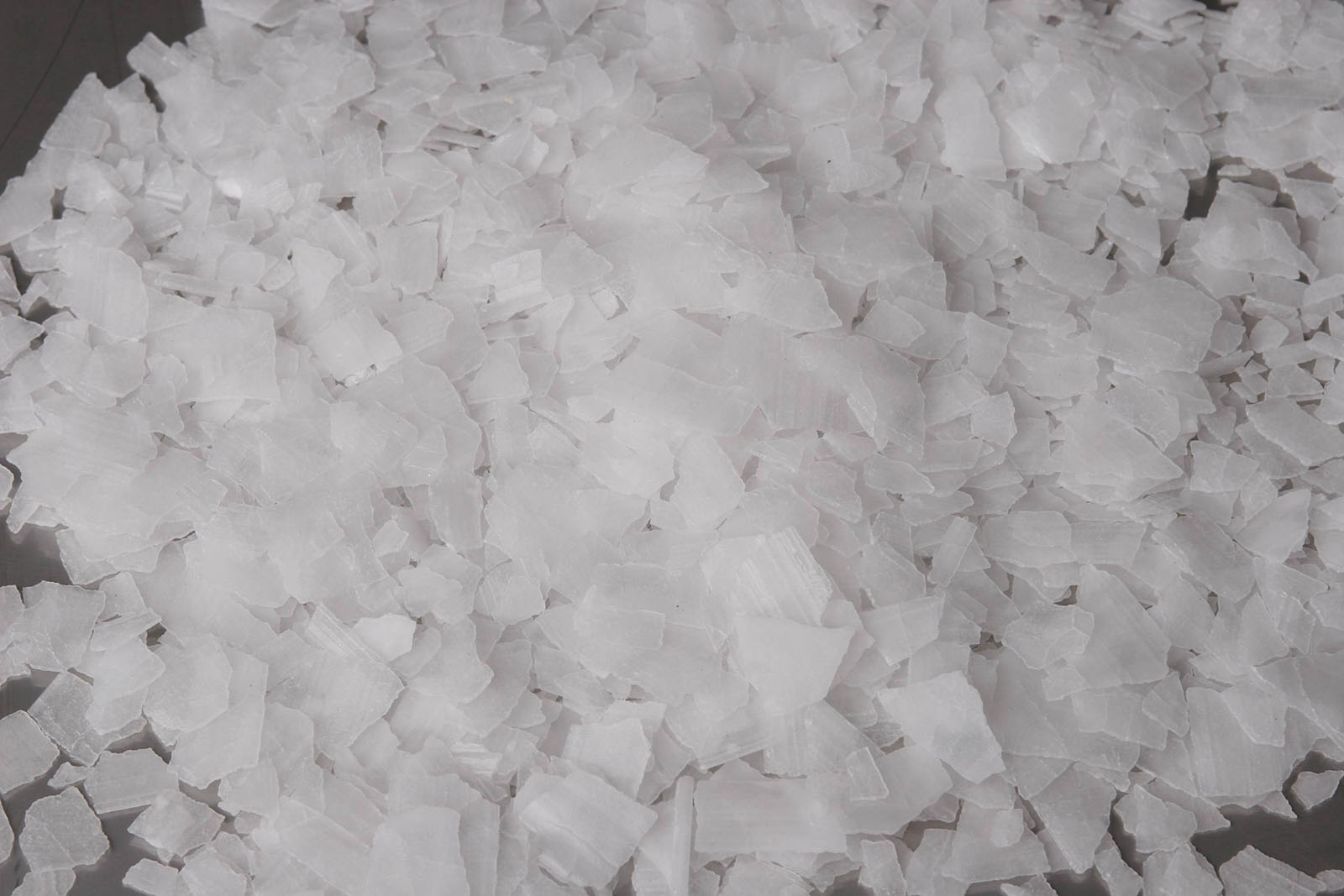
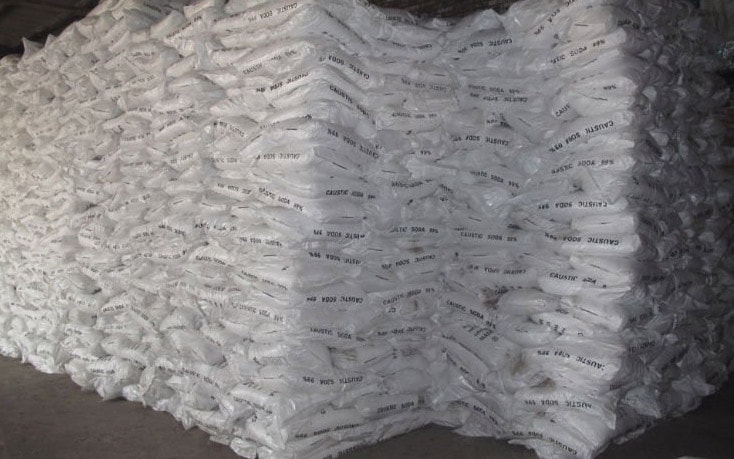
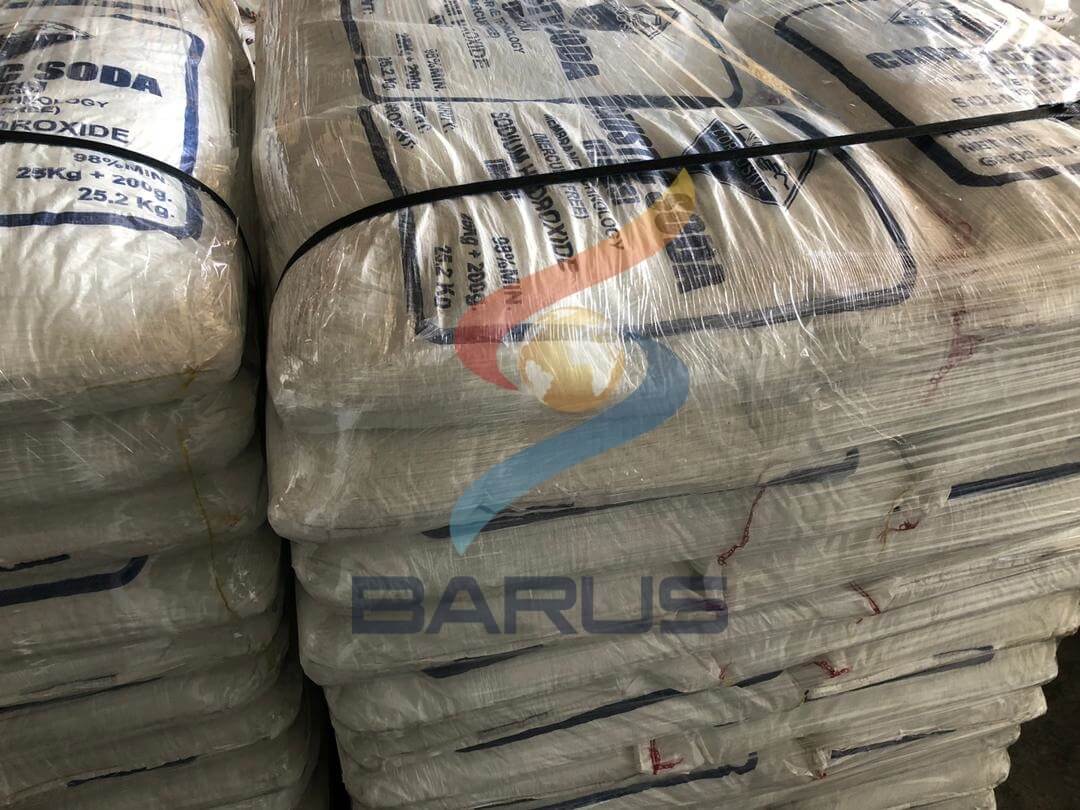
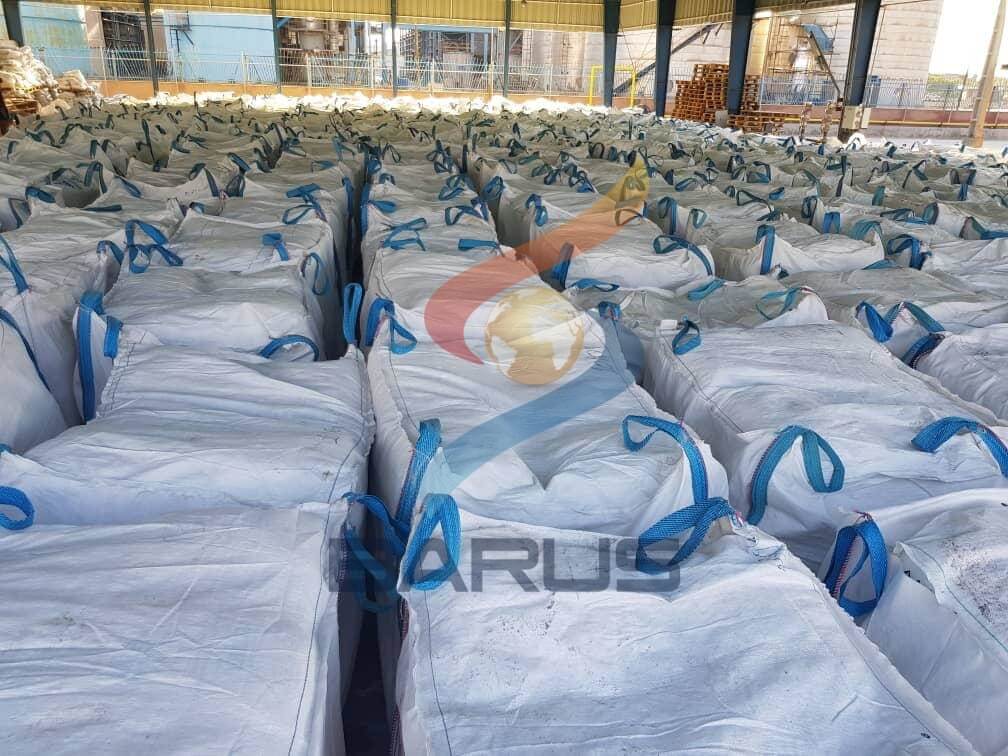
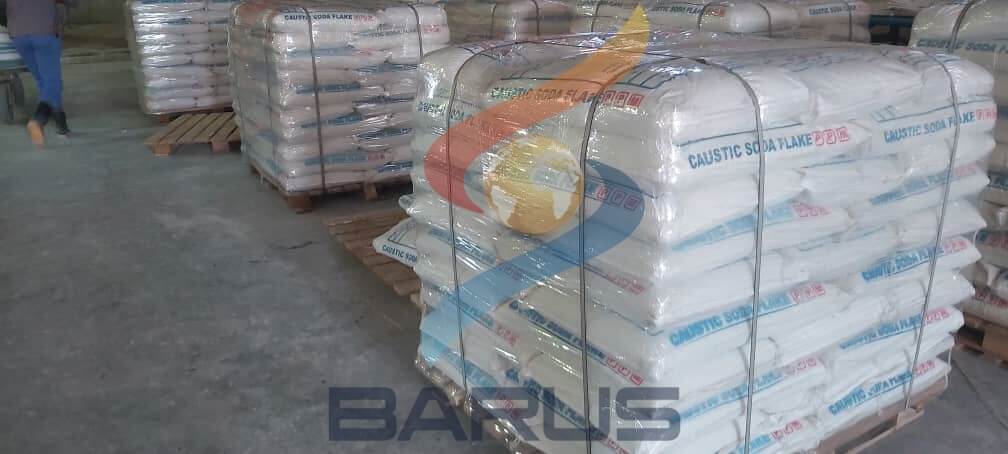
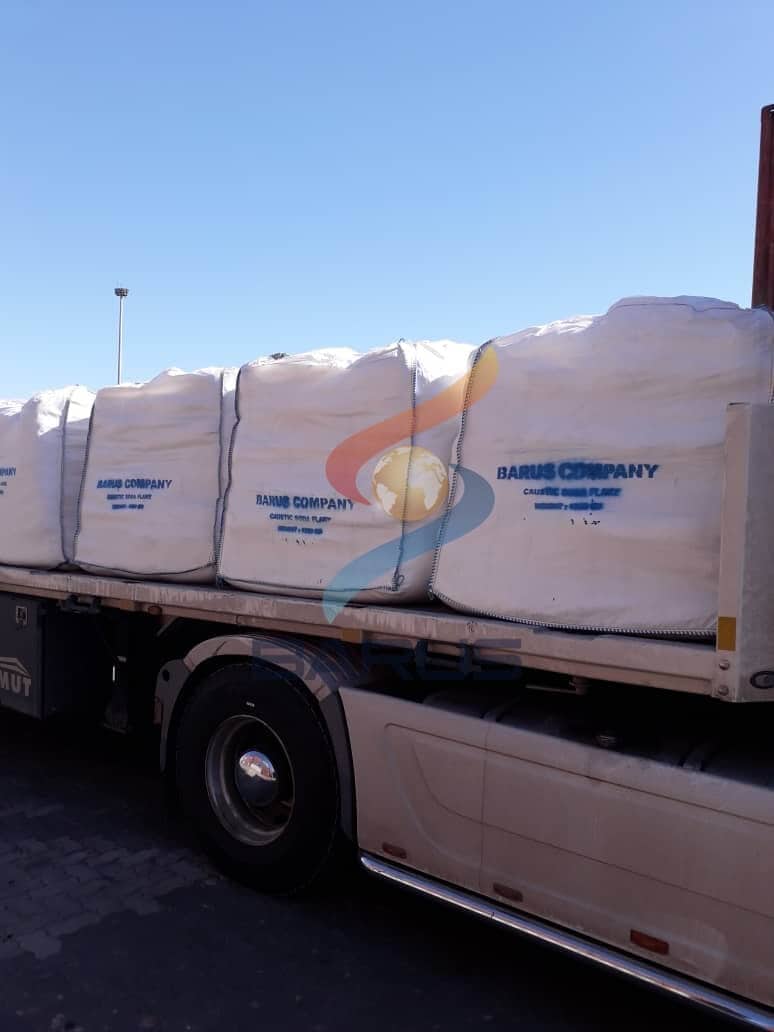
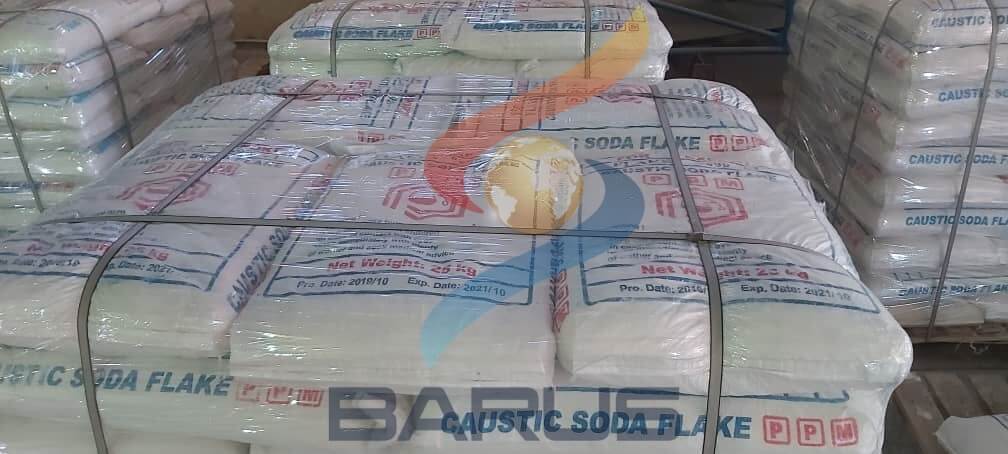
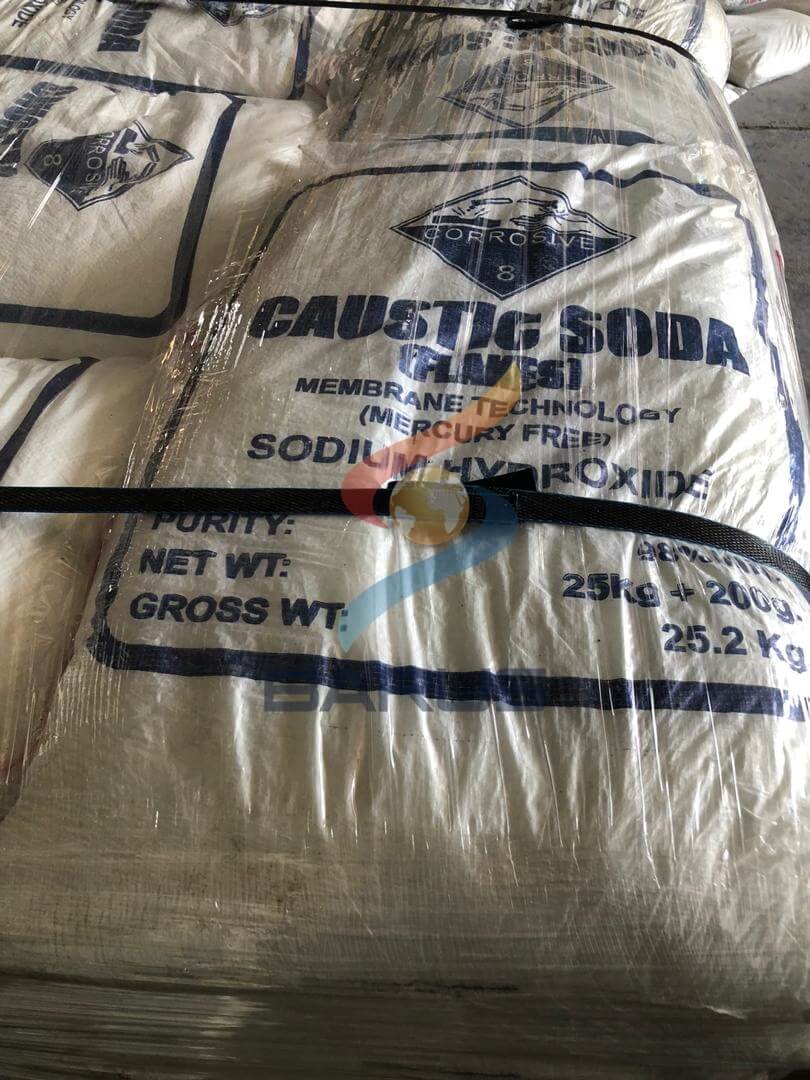
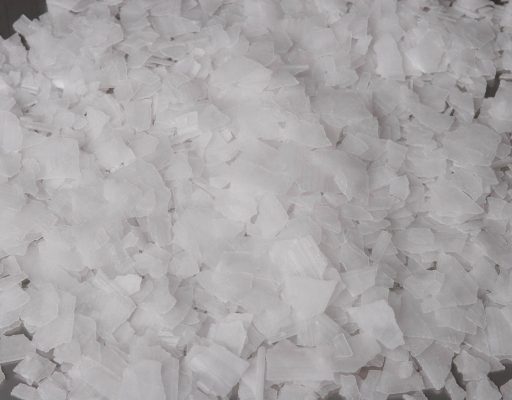
Sodium hydroxide or caustic soda is a white solid substance with the chemical formula NaOH and it is obtained through the process of electrolysis of sodium chloride soluble in the electrolytic containers. It is called caustic soda because it is highly corrosive in nature. It is available in many forms in the industry, and the most common forms are caustic soda flakes and caustic soda pearls. Sodium hydroxide as a strong base, is considered from one of the most important industrial chemicals and strong absorbent of moisture.
It is mostly traded as an aqueous solution, typically concentrated to 50%, but many other concentrations are commercially available depending on the application of the compound. Caustic soda is also traded as concentrate solid pellets, flakes or bulk fused (about 98% concentration). Any solutions are also called “soda lye” which are milky white to yellowish-brown coloured liquids.
Pure sodium hydroxide is a colorless crystalline solid that melts at 318 °C without decomposition. It is highly soluble in water, with a lower solubility in polar solvents such as ethanol and methanol. NaOH is insoluble in ether and other non-polar solvents.
Similar to the hydration of sulfuric acid, dissolution of solid caustic soda flakes in water is a highly exothermic reaction where a large amount of heat is liberated, posing a threat to safety through the possibility of splashing. The resulting solution is usually colorless and odorless. As with other alkaline solutions, it feels slippery with skin contact due to the process of saponification that occurs between NaOH and natural skin oils.
Sodium hydroxide is industrially produced as a 50% solution by variations of the electrolytic chloralkali process. Chlorine gas is also produced in this process. Solid sodium hydroxide is obtained from this solution by the evaporation of water. Solid sodium hydroxide is most commonly sold as flakes, prills, and cast blocks.
The following properties of this substance are important:
The caustic soda is highly alkaline and strongly hydrophilic. This capacity makes caustic soda extremely corrosive to skin tissue and hazardous to all animal and plant life. All direct, unprotected physical contact with the substance should be avoided.
The caustc soda is moderately toxic; however, the major hazard is its corrosive effects. Caustic soda flakes is not volatile or flammable.
Properties of Caustic Soda Flakes:
White solid
Highly caustic
Strong base
Soluble in water, ethanol and methanol
Readily absorbs water (hygroscopic) and carbon di oxide from the air
Strong electrolyte
Not volatile, but can rise easily in air as an aerosol
Dissolution of solid caustic soda in water in highly exothermic
The major users of caustic soda flakes are the aluminum industry, pulp & paper, leather and textile, oil and gas, oil wells, food industry and the chemical industry. The main applications are water treatment and water purification, as cleaning agent, or a wide range of uses in chemical industry like starch production or for the desulphurization in the petrochemical industry.
Sodium hydroxide is a popular strong base used in industry. Around 56% of sodium hydroxide produced is used by industry, 25% of which is used in the paper industry. Sodium hydroxide is also used in the manufacture of sodium salts and detergents, pH regulation, and organic synthesis. It is used in the Bayer process of aluminium production. In bulk, it is most often handled as an aqueous solution, since solutions are cheaper and easier to handle.
Ishtar Company is able to supply Caustic Soda Flakes 98% at competitive prices